When we are young, we all suffer from the same beautiful, terrifying delusion: we think we have figured everything out. I certainly did. At twenty-one, fresh out of university, I genuinely believed I would arrive in New York City, open my mouth at an audition, and immediately land the lead in a Broadway musical. Naturally, that musical would become a movie, and I would effortlessly make the transition from stage to screen, following in the footsteps of people like Barbra Streisand and Hugh Jackman.
I was convinced that talent would be immediately recognized. I imagined my career unfolding along some kind of golden Hollywood pathway.
Surprise: it didn't quite work out that way.
The entertainment business—and probably every creative industry—is full of young people who believe they understand the rules before they have even learned which rules matter. But sometimes, they actually do understand something the older generation does not. I was reminded of that recently when I accepted a role in a film directed by a 22-year-old filmmaker—an opportunity I almost rejected.
The Young Gun
This young director is very much a product of his generation and the new creative economy. He shoots films on a mobile phone, edits them himself, and distributes them through social media. Remarkably, it works. His digital numbers are impressive, drawing millions of views and tens of thousands of subscribers from a relatively small number of projects.
When I was first approached about appearing in his film, I was intrigued but highly skeptical. Then I read the script. I stared at the pages thinking, What on earth is this?
It was unlike anything I had encountered in my decades of working in the entertainment business. The structure, the tone, and the storytelling all felt completely foreign to me. My first instinct was that I simply didn't understand the medium. In retrospect, that was precisely the point.
I have been in this business for more than four decades. I have worked in theatre, film, television, and music, and performed all over the world. I have watched technologies come and go, trends rise and disappear, and entire business models collapse and reinvent themselves. Napster, anyone?
However, experience can create its own kind of blindness. Sometimes we become so accustomed to the way things have always been done that anything unfamiliar automatically looks wrong. So, I did something I have learned to do over the years: I put my skepticism aside, accepted the role, and did the work.
Then I Saw the Finished Film
When I eventually attended a private screening of the completed film, I was honestly nervous. I had spent weeks wondering what this strange script would look like when it was actually put on screen.
Then the film started, and my jaw dropped.
It was good. Not merely good for something shot on a phone, and not just good "for a 22-year-old". It was genuinely entertaining, funny, imaginative, and completely original. Suddenly, I understood. This young filmmaker wasn't trying to make the kind of movie I would have made; he was creating something that belonged to his generation. Above all, he possessed something that is extremely difficult to teach: a distinctive voice. That is absolute gold.
He is also extraordinarily hardworking, ambitious, and fearless. He has figured out how to create, edit, publish, and build an audience without waiting for permission from the traditional entertainment establishment. I had to give him enormous credit. In fact, I found myself thinking that perhaps the Old Guard has more to learn from the Young Guns than we sometimes care to admit.
Life Imitating Art
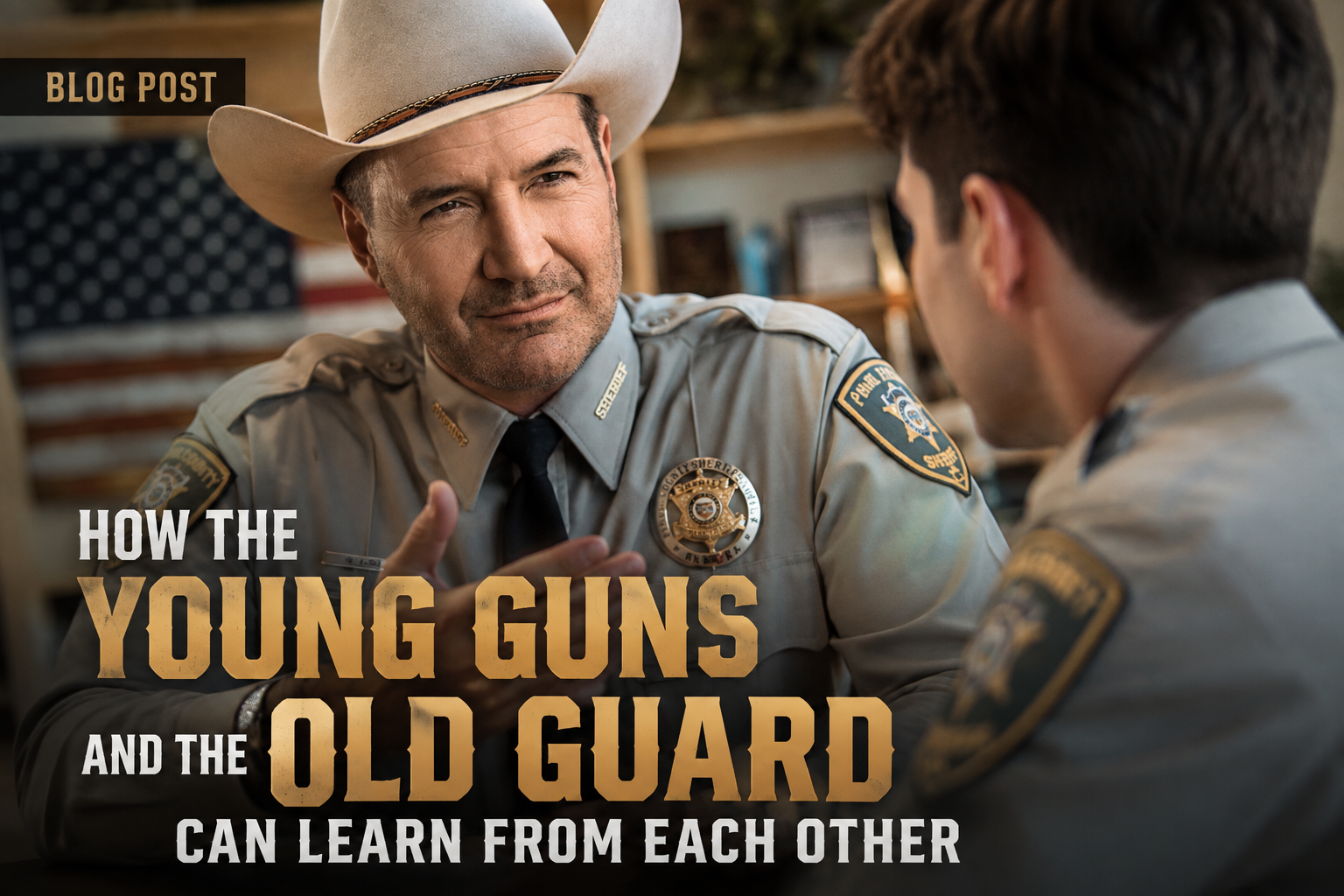
There was another delicious irony to this experience. The film itself contains a scene in which a young filmmaker meets an older, highly successful Hollywood director—played by me.
In the scene, the young filmmaker proudly explains his unconventional methods while the veteran director sits there, completely horrified. The character I played cannot understand why anyone would make a serious film using a consumer cellphone. He lectures the young man about professional equipment, proper filmmaking technique, and the "sacred art" of cinema, essentially telling him that he is doing everything wrong.
It was a terrific scene to play, and, of course, entirely ironic. In real life, I had nearly made the exact same mistake. I had looked at this young man's methods and initially thought, I don't understand this. But instead of walking away, I decided to see what he could actually do. That turned out to be one of the best decisions I could have made.
And Then I Made the Mistake of Giving Him Advice
After seeing the finished film, I did what older people in creative industries are often compelled to do: I offered some advice.
I told him that the film was strong enough that he should consider entering it into major film festivals. I suggested that perhaps he could delay the social-media release, build some industry interest, and use the festival circuit to create grander opportunities for himself. I wasn't trying to tell him how to make his film; I was talking about the business surrounding the film. There is a major difference.
He had already demonstrated that he knew how to make something people wanted to watch. What I was suggesting was that he might also want to learn how to turn that brief attention into a sustainable career.
His reaction? He laughed. Not maliciously, and not angrily. He simply didn't see the world the way I did.
Frankly, I found it fascinating. Because there we were: two people from completely different generations, looking at exactly the same piece of work and seeing two completely different futures.
What the Young Guns Understand
There are things this younger generation understands instinctively that took the rest of us decades to learn:
Direct communication with an audience. Personal branding and digital footprint. Independence from traditional studios, TV networks, or record companies. Algorithmic reach and distribution. Short-form storytelling tailored for modern attention spans.
They understand that a person with a smartphone and a powerful idea can potentially reach millions of people without asking anyone for permission. That is revolutionary, and the Old Guard would be foolish to dismiss it. A young artist can look at a veteran and think, Why are you still doing things that way? Sometimes, the young artist is absolutely right.
What the Old Guard Understands
But there are things experience teaches that a million views simply cannot match:
A career is not the same thing as a viral moment. An audience is not necessarily a built industry. Transient attention is not the same as a concrete opportunity. Current popularity does not automatically translate into longevity ten years from now.
Traditional entertainment infrastructure exists for a reason. Agents, managers, producers, distributors, financiers, lawyers, publicists, casting directors, festivals, and television networks can all be frustrating, bureaucratic, and maddening. But they can also be extraordinarily useful in forging a life-long career.
The challenge is not deciding whether the old system or the new system is "right". The challenge is learning how to utilize both.
The Danger of Thinking You've Figured It All Out
My concern wasn't that this young filmmaker was wrong; quite the opposite. He had proved that his unconventional approach could work beautifully. My concern was that he might eventually make the same mistake I made when I was young: confusing what works right now with what will work forever.
At twenty-two, you can afford to experiment. You can take enormous risks, sleep on a friend's couch, spend six months making something nobody understands, and start all over again. That freedom is extraordinary.
But time has a way of changing the equation. At thirty-two, forty-two, or fifty-two, your responsibilities change. Your ambitions evolve, and your definition of success shifts. The very things you dismiss at twenty-two may become extremely valuable at thirty-five. Conversely, the things you thought were essential at twenty-two may turn out to be completely irrelevant later on. That's the strange thing about creative careers: we are constantly learning that the rules we thought were permanent were actually temporary.
The Real Lesson
The greatest mistake either generation can make is assuming that the other side has nothing to teach them.
The Young Guns have something the Old Guard desperately needs: fearlessness. They are willing to question assumptions, throw away tired rules, and build entirely new systems.
The Old Guard has something the Young Guns will eventually need: perspective. We have seen trends come and go, made expensive mistakes, survived failures, and watched careers explode overnight only to disappear just as quickly.
Neither side has the complete answer, but put the two together and something remarkable happens. The young artist brings the imagination, technology, and willingness to break the rules. The veteran brings experience, context, and an understanding of how to navigate the world beyond the screen. That shouldn't be a battle; it should be a partnership.
This young director taught me that initial skepticism is not necessarily evidence that an approach is bad—it is simply evidence that you don't understand it yet. Instead of allowing discomfort to make the decision for me, I took the risk, and I am incredibly glad I did.
But perhaps he will eventually learn something from me, too. Not because I have been in the business longer, and not because the Old Guard is automatically wiser. Simply because there are some doors you cannot see when you are standing too close to the smartphone in your hand.
The future of entertainment isn't going to belong exclusively to the Young Guns, nor will it belong solely to the Old Guard. It will belong to the people smart enough to recognize what each generation gets right—and humble enough to admit what it gets wrong. If we can stop arguing long enough to listen, we might discover that the next great revolution in entertainment isn't about replacing one generation with another. It's about combining the best of both.

Mark Janicello
Award-winning performer, playwright, and voiceover artist with 35+ years of international experience across 53 countries. Author of "Naked in the Spotlight."